Pre-Fabricated Data Centre Sites: What Needs to Be in Place Before Delivery?
Pre-fabricated data centres can reduce deployment time because much of the infrastructure is pre-engineered, assembled and tested away from site. However, the destination still needs to be properly prepared.
Before delivery, you should confirm that the site can physically receive the unit, the foundations and access route are suitable, sufficient electrical capacity is available, fibre connectivity is ready, cooling requirements have been addressed and commissioning arrangements are in place. A well prepared site helps avoid delays, additional costs and last-minute design changes.
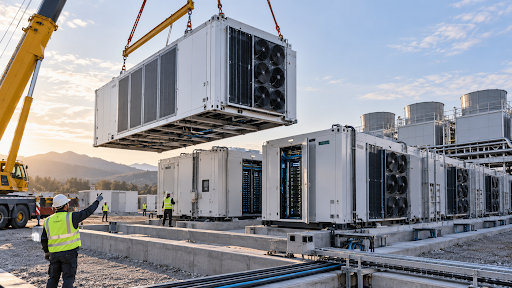
What needs to be ready before a pre-fabricated data centre arrives?
Site readiness means more than clearing a space for the module. The supporting infrastructure needs to match the data centre design and its expected IT load.
Key checks include the final position and foundations, delivery and crane access, incoming power supply, earthing, cable routes, fibre connectivity, cooling interfaces, security, maintenance access and the commissioning plan.
These requirements should be considered early. A pre-fabricated data centre may arrive largely assembled, but it still needs to connect safely and reliably with the wider site.
Site access and physical preparation
One of the first questions is whether the finished module can reach its final position.
Access roads, gateways, turning areas and loading restrictions should be checked against the dimensions and weight of the unit. Where crane access is required, the lifting plan must also consider positioning, overhead restrictions and safe working space.
The installation area must be suitable for the expected load. Depending on the solution, this could mean prepared foundations, a concrete base or another engineered support structure. There should also be enough space for maintenance, airflow and future expansion.
Discovering that an access route is too narrow or the final position cannot support the module can undermine one of the main benefits of pre-fabricated data centres: faster deployment.
Is the incoming power supply sufficient?
The site must have enough electrical capacity for the current IT load and planned growth.
This means assessing the incoming power supply, switchgear, the size of cables, power distribution and connection point. The UPS system should also be designed around the critical load, required runtime and resilience strategy. Backup generator integration may form part of the wider power protection design.
Earthing arrangements and cable routes should be confirmed before installation so the module can be connected without avoidable delays.
At Source UPS, power protection is central to what we do. We design and supply UPS systems, backup power and rack power distribution as part of complete data centre infrastructure solutions, helping customers size equipment around actual demand rather than treating each component separately.
Cooling, connectivity and supporting services
Power is only one part of data centre site readiness. The module also needs suitable cooling and reliable network connectivity.
Cooling requirements should reflect the IT load and rack density. Depending on the chosen system, the site may need external condensers, pipework, drainage or other mechanical services. Space for external equipment and maintenance access should be factored into the design.
Fibre connectivity, telecommunications routes and structured cabling should also be planned before delivery. If the pre-fabricated data centre is being added to an existing site, cable pathways need to integrate with the current network while minimising disruption.
Monitoring, fire suppression, physical security and environmental controls should also form part of the wider infrastructure plan.
What should be checked before commissioning?
Before handover, the installation should be checked as a complete system rather than as a collection of individual products.
The commissioning plan should confirm that power, UPS operation, cooling, alarms, monitoring and other critical systems perform as intended once connected on site. Interfaces between the new data centre and existing electrical or network infrastructure should also be tested.
Factory testing is valuable, but site commissioning confirms that the installed system works correctly within its real operating environment.
Plan for operation, not just delivery
The readiness of the site should also consider what happens after handover.
Engineers need safe access to UPS equipment, cooling systems, racks and power distribution for servicing. Monitoring should provide visibility of power loads, battery condition, temperature and other environmental factors.
Capacity planning matters too. If higher rack densities or additional IT equipment are expected later, allowing for extra power, cooling and rack capacity from the outset can make future expansion easier.
How can Source UPS help with pre-fabricated data centres?
At Source UPS, we specialise in data centre infrastructure for edge computing, on-premise and regional data centre applications. We work with customers from the planning stage onwards, assessing power, cooling, capacity and resilience requirements before recommending a solution.
Our team can support projects with UPS systems, racks, cooling, power distribution, monitoring, delivery, installation, commissioning and ongoing maintenance. As an independent specialist, we work with leading infrastructure manufacturers and focus on finding the right combination of equipment for each site.
If you are planning a pre-fabricated data centre, early site preparation is one of the best ways to protect the deployment schedule. By checking access, electrical capacity, cooling, connectivity and commissioning requirements before delivery, you can reduce avoidable delays and create infrastructure that is ready to perform from day one.
I found Source UPS when looking to replace the large UPS systems on one of our sites. The price was competitive and communication was great, which made it much easier as this is the first time we have dealt with UPS systems. Everything was delivered & installed as promised. We will definitely be using Source UPS again.