The Real Cost Benefits of Modular UPS Systems Over Time
If your business is looking at uninterruptible power supplies, the initial purchase price is probably dominating the conversation. However, while the upfront cost matters, it rarely tells the full story.
For many organisations, especially those running server rooms, data centres or critical IT environments, the real cost of ownership is spread over many years.
This is where a modular UPS system often proves its value.
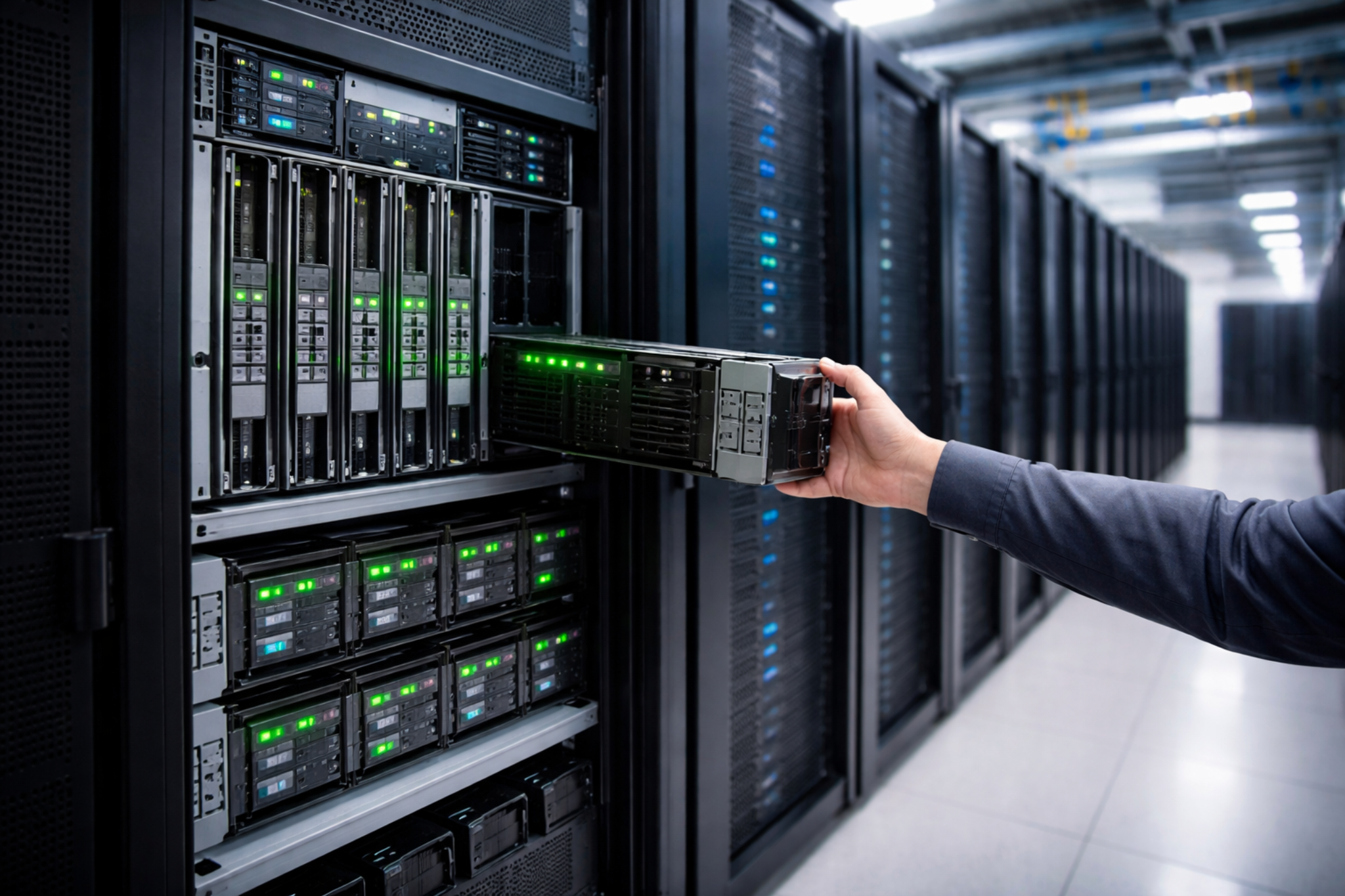
Rather than being a simple alternative to a traditional UPS, a modular UPS offers a different approach to power protection, one that can deliver significant long-term savings while improving resilience and efficiency.
At Source UPS, modular UPS solutions are frequently specified for customers who want flexibility, predictable growth and lower lifetime costs without compromising uptime.
Understanding the Modular UPS Approach
A modular UPS uses a chassis-based design populated with individual hot-swappable power and battery modules. Each module contributes a defined amount of capacity, and additional modules can be added as demand increases.
Unlike traditional UPS systems, which are typically sized for future load from day one, modular UPS systems allow organisations to start small and grow gradually. This design philosophy is central to their cost advantage.
Avoiding the Cost of Oversizing from Day One
One of the biggest hidden costs of traditional UPS systems is oversizing.
To accommodate future expansion, many organisations install a UPS that is far larger than their current load requires. While this may appear sensible, it leads to several inefficiencies:
- Poor operating efficiency at low load
- Higher capital expenditure upfront
- Increased energy losses
- Larger physical footprint
A modular UPS eliminates much of this waste. By closely matching capacity to the actual load, businesses avoid paying for unused power capacity that may not be needed for years, or at all.
Source UPS often advises customers to adopt a right-sizing strategy, adding modules only when load growth genuinely requires it. This keeps capital spend aligned with real demand rather than speculation.
Improved Energy Efficiency at Partial Loads
UPS efficiency is rarely static. Most systems operate most efficiently when running close to their designed load. Oversized systems tend to run at partial load for long periods, reducing efficiency and increasing energy costs.
Modular UPS systems maintain higher efficiency across a wider load range. As demand increases, additional modules are added, allowing the UPS to continue operating near its optimal efficiency point.
Over time, this translates into:
- Lower electricity bills
- Reduced heat output
- Lower cooling requirements
Reduced Costs for Maintenance and Repairs
Maintenance is another area where modular UPS systems deliver long-term savings.
Traditional UPS systems often require full shutdowns or complex bypass procedures for maintenance or repairs. This can lead to planned downtime, higher labour costs and increased operational risk.
With a modular UPS:
- Individual power or battery modules can be hot-swapped
- Faulty modules can be replaced without shutting down the system
- Maintenance tasks are faster and less disruptive
This significantly reduces mean time to repair (MTTR) and lowers the risk of costly outages during maintenance activities.
Source UPS designs modular UPS solutions that prioritise serviceability, helping customers maintain uptime while keeping maintenance costs under control.
Built-In Redundancy Reduces Financial Risk
Downtime is expensive. Whether it results in lost revenue, reputational damage or regulatory penalties, the cost of power failure often far exceeds the price of the UPS itself.
Modular UPS systems inherently support N+1 redundancy, meaning that an additional module is always available to take over if one fails. This redundancy applies not just to power, but also to batteries and control intelligence.
By eliminating single points of failure, modular UPS systems reduce the likelihood of catastrophic outages and the financial impact associated with them.
For organisations running critical applications, this resilience is not just a technical benefit but a financial safeguard.
Lower Upgrade and Expansion Costs
Business growth is rarely linear or predictable. Traditional UPS systems often require major upgrades or complete replacement when capacity limits are reached.
A modular UPS allows capacity upgrades to be carried out incrementally:
- No need to replace the entire UPS
- No large one-off capital expenditure
- No disruption to live systems
This pay-as-you-grow model spreads costs more evenly over time and aligns investment with business growth. It also protects against overinvestment in infrastructure that may never be fully utilised.
Useful for Longer and Better Return on Investment
Because modular UPS systems adapt to changing loads, they often remain suitable for much longer than traditional designs.
As technology evolves and IT demands change, the ability to reconfigure or expand a UPS system extends its useful life and improves return on investment.
Source UPS works with leading manufacturers such as APC, Riello, Eaton and Vertiv to design modular UPS solutions that remain flexible and relevant as customer requirements evolve.
Operational Savings Beyond the UPS Itself
The cost benefits of modular UPS systems extend beyond the UPS hardware.
Smaller initial installations can lead to:
- Reduced floor space requirements
- Lower structural and installation costs
- Simplified cabling and commissioning
- Reduced cooling infrastructure
When viewed holistically, these operational savings further strengthen the financial case for modular UPS design.
Why Independent Design Makes the Difference
While modular UPS systems offer clear advantages, the real cost savings depend on the correct specification and design.
As an independent power protection specialist, Source UPS provides unbiased advice, assessing your particular environment, growth plans and risk profile before recommending a solution.
For more information, don’t hesitate to get in touch today.
I’ve found working with Source UPS to be a great experience. They have great product knowledge making them my go to experts.
Source UPS are my trusted partner because they make working with them easy while their service is consistently of a high standard.